Welcome to CPTPP.co.uk
The Comprehensive and Progressive Agreement for Trans-Pacific Partnership (CPTPP) presents a transformative opportunity for UK food and drink manufacturers to expand into high-growth markets with reduced trade barriers. As the first European member of this bloc, the UK gains preferential access to 11 dynamic economies across Asia-Pacific and the Americas, offering tariff elimination, simplified customs procedures, and a competitive edge over non-member exporters.
The key advantages for UK businesses, providing actionable insights on cost savings, market access, and long-term growth potential in CPTPP markets.
What is the CPTPP?
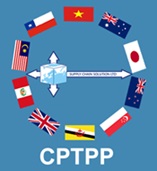
The CPTPP is a free trade agreement between 11 countries:
– Canada, Mexico, Peru, Chile (Americas)
– Japan, Malaysia, Brunei, Singapore, Vietnam (Asia)
– Australia, New Zealand (Oceania)
The UK’s accession in 2023 unlocks a combined market of £12 trillion GDP and over 500 million consumers, with significant benefits for food and drink exporters.
Key Advantages for UK Food & Drink Exporters
Tariff Elimination on Many Food and Drink Exports
One of the most immediate benefits of CPTPP membership is the phased elimination of tariffs on key UK exports. This makes British products more competitive in markets where import costs were previously prohibitive.
– Cheese & Dairy: Japan will eliminate tariffs on cheddar cheese (currently up to 29.8%) over 15 years, while Canada removes duties on UK chocolate (previously 5-8%).
– Meat & Seafood: Vietnam will reduce tariffs on UK pork from 15% to 0%, and Malaysia will scrap duties on salmon (previously 10-15%).
– Beverages: UK whisky exports already enjoy zero tariffs in Canada, Mexico, and Peru, with further reductions in Japan and Malaysia.
Reduced Trade Barriers for Agricultural and Processed Goods
CPTPP countries have agreed to minimize non-tariff barriers, such as restrictive quotas and complex licensing requirements. This means:
– Fewer export restrictions on UK meat, dairy, and processed foods.
– More predictable market access, reducing uncertainty for exporters.
Access to High-Growth Markets in the Asia-Pacific Region
Asia-Pacific is home to some of the fastest-growing consumer markets globally, with rising demand for premium, high-quality food and drink.
– Japan & Singapore: Strong appetite for UK whisky, cheese, and specialty snacks.
– Vietnam & Malaysia: Expanding middle class driving demand for British-branded tea, biscuits, and dairy.
– Mexico & Chile: Growing interest in UK confectionery and beverages.
Competitive Advantage Over Non-CPTPP Member Exporters
EU and US exporters face higher tariffs in CPTPP markets, giving UK businesses a pricing edge.
– Example: UK chocolate exporters to Canada now pay 0% tariff, while EU competitors still face 5-8%.
Simplified Customs Procedures for Faster Export Clearance
The CPTPP standardizes trade documentation and digital processes, reducing delays at borders. Benefits include:
– Faster clearance times for perishable goods like meat and dairy.
– Lower administrative costs due to streamlined paperwork.
Increased Export Opportunities for UK Dairy, Meat, and Beverages
With lower tariffs and fewer restrictions, UK producers can expand sales of:
– Dairy: Cheese, butter, and cream to Japan and Mexico.
– Meat: Pork, beef, and lamb to Vietnam and Canada.
– Beverages: Whisky, gin, and premium soft drinks across CPTPP markets.
Protection Against Arbitrary Trade Restrictions
The CPTPP includes legally binding dispute mechanisms, preventing sudden import bans or unfair technical barriers. This provides:
– More stable trade conditions for UK exporters.
– Greater confidence when entering new markets.
Potential for Increased Investment in UK Food Production
As demand grows, CPTPP investors may fund UK processing facilities, farms, and innovation projects, boosting domestic production capacity.
Stronger Supply Chain Integration with CPTPP Member Countries
UK manufacturers can source ingredients (e.g., Canadian wheat, New Zealand dairy) at lower costs while still qualifying for CPTPP tariff benefits under cumulation rules.
Recognition of UK Food Standards, Aiding Market Acceptance
CPTPP members acknowledge UK food safety and quality standards, reducing the need for costly reformulations or additional certifications.
Opportunity to Diversify Export Markets Beyond the EU
Reducing reliance on the EU, UK exporters can spread risk and tap into new revenue streams across Asia-Pacific and the Americas.
Easier Compliance with Unified Regional Trade Regulations
A single set of rules for CPTPP markets simplifies compliance, cutting costs for businesses selling to multiple countries.
How UK Businesses Can Prepare for CPTPP Exports
- Check Tariff Reductions: Use the UK Trade Tariff Tool to identify savings.
- Verify Rules of Origin: Ensure products meet CPTPP criteria for preferential rates.
- Engage Local Distributors: Partner with in-market experts to navigate regulations.
-
Leverage Government Support: Access grants via Department for Business & Trade (DBT) (https://www.great.gov.uk/).
Additional Resources
Ready to explore CPTPP markets? Start planning your export strategy today!
Would you like further details on specific products or countries?
The entire export, shipping, warehousing & distribution process will be handled by Supply Chain Solution Ltd (Food & Drink Grade Logistics Specialists).
For any enquiries please email: trading@cptpp.co.uk
Global Trade news updates
- Members intensify discussions on WTO reform based on substantive proposalsby WTO on October 23, 2026 at 12:00 am
At a transparency session on 23 October, WTO members welcomed progress in the WTO reform process and acknowledged a clear shift toward more substantive and focused discussions. Ahead of the meeting, facilitators for the discussions on WTO reform reported on their engagement with members during October on the four tracks of reform: decision-making, foundational issues, development, and level playing field.
- Zimbabwe initiates safeguard investigation on pasta productsby WTO on October 22, 2026 at 12:00 am
On 22 October 2026, Zimbabwe notified the WTO’s Committee on Safeguards that it had initiated on 18 September 2026 a safeguard investigation on imports of certain pasta products.
- Trade Facilitation Committee advances TFA review and discusses implementation supportby WTO on October 21, 2026 at 12:00 am
WTO members meeting in the Committee on Trade Facilitation on 21-22 October advanced work on the second review of the Trade Facilitation Agreement (TFA) and reaffirmed their commitment to completing the review by the end of the year. They also exchanged experiences on key implementation issues, reviewed specific trade facilitation matters raised by members, and discussed technical assistance needs.
- The Philippines launches safeguard investigation on porkby WTO on October 21, 2026 at 12:00 am
On 21 October 2026, the Philippines notified the WTO’s Committee on Safeguards that it had initiated on 9 October 2026 a safeguard investigation on imports of pork.
- WTO and multilateral partners review progress on supply chain finance initiativeby WTO on October 16, 2026 at 12:00 am
Director-General Ngozi Okonjo-Iweala joined leaders of multilateral development banks and other international organizations at a high-level roundtable held on the sidelines of the 2026 World Bank – International Monetary Fund (IMF) Annual Meetings in Bangkok, Thailand, on 16 October to review progress in expanding supply chain finance in developing economies and to discuss priorities for the next phase of cooperation.
- Import Licensing Committee addresses notifications, trade concerns, transparency effortsby WTO on October 15, 2026 at 12:00 am
At its 15 October meeting, the WTO Committee on Import Licensing examined challenges for WTO members in preparing notifications, including findings from a recent WTO workshop for government officials. It also reviewed the latest information on members' notification practices. In addition, the Committee considered a range of trade concerns and reflected on lessons from recent experience-sharing sessions aimed at strengthening communication, public-private engagement and access to information on import licensing procedures.